Handwritten Notes for Kids: Why This Simple Habit Changes Everything
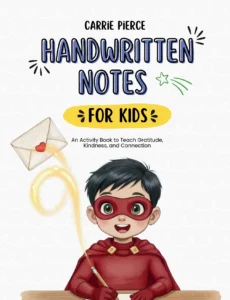
Handwritten notes for kids might seem simple, but they stick in a way almost nothing else does.
A few years ago, I found a box of old notes.
Not anything fancy. Just little scraps. Cards. Folded paper.
But I couldn’t throw them out.
Because the second I read them, I remembered exactly how I felt when I got them.
That surprised me.
I’ve sent thousands of texts in my life. I don’t remember a single one.
But I remember those notes.
That’s what started this whole thing.
What I Was Seeing With Kids
Kids today are communicating all the time.
But a lot of it is quick. Surface-level. In and out.
And I started noticing something.
They weren’t always learning how to:
- say thank you in a real way
- tell someone why they matter
- work through things like “I’m sorry” or “I appreciate you”
Not because they don’t care.
They just haven’t been taught how.
And honestly, most of us aren’t great at modeling it either.
So instead of overthinking it, I thought… what if we just made this simple?
What This Book Actually Does
Handwritten Notes for Kids isn’t a “sit down and read it cover to cover” book.
It’s more like a tool.
It walks kids through real situations they already have:
- thanking someone
- writing a birthday card that actually means something
- cheering someone on
- apologizing
- reaching out when someone’s having a tough time
And it gives them a place to practice.
Not in a stiff, formal way. In a way that feels doable.
There’s even a fill-in-the-blank style note early on so they’re not staring at a blank page wondering what to say.
Because that’s usually where they get stuck.
That’s exactly why I created a few simple tools parents and teachers can grab for free.
What I Care About (This Is the Point)
I didn’t write this so kids would have better handwriting.
I wrote it because I want kids to:
- notice people
- think about someone other than themselves
- put real thoughts into words
- feel confident doing it
That’s it.
If a kid can do that, they’re ahead of the game.
How It Actually Gets Used
You don’t need to turn this into a whole thing.
This works best when it’s just part of life.
At home:
- one note a week is plenty
- no pressure, no perfection
- let them pick who it’s for
In school:
- quick activity that actually means something
- no prep
- gets kids thinking beyond themselves
In real moments:
- after a birthday
- after someone helps them
- after they mess up and need to fix it
- when someone’s having a rough day
It just gives them a way to respond instead of moving on.
The Part People Don’t Expect
When kids start doing this, something shifts.
They start paying attention more.
They look for things to appreciate.
They actually enjoy making someone else feel good.
And weirdly, it builds their confidence at the same time.
Why This Matters Long-Term
This isn’t just about kids writing nicer notes.
It’s about how they show up in relationships later.
The kid who learns how to say thank you well
becomes the adult people want to work with.
The kid who can put appreciation into words
becomes the friend people keep.
The kid who knows how to apologize thoughtfully
becomes someone others trust.
These aren’t small skills.
They’re the kind that quietly open doors over time.
Bottom Line
This isn’t about notes.
It’s about helping kids realize their words have weight.
Because they do.
And if they learn that early, it changes how they show up everywhere else.
